
How Floating Treatment Wetlands Work
HOW IT WORKS
Turning natural processes into measurable water quality outcomes
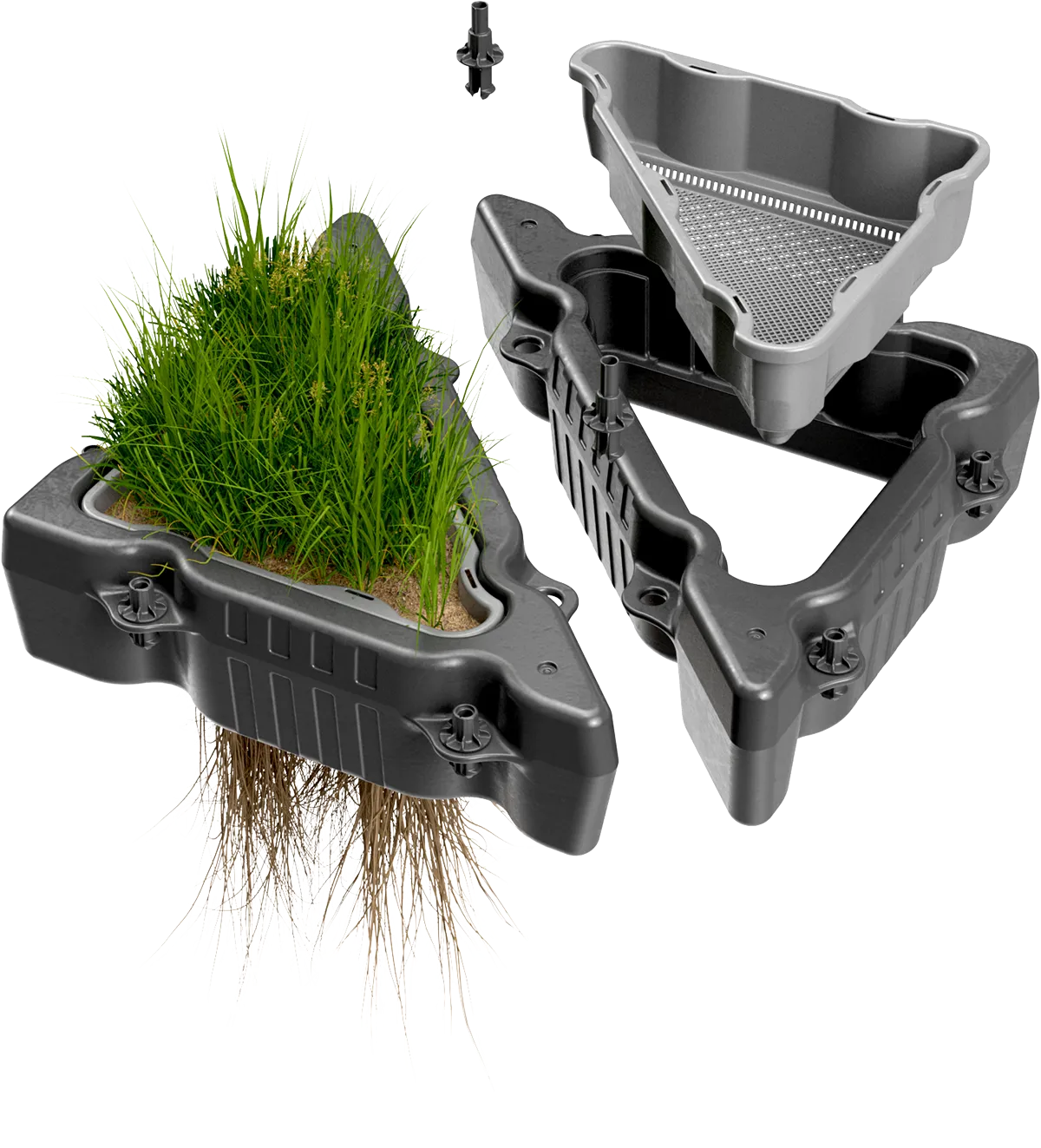
Floating Treatment Wetlands (FTWs) improve water quality by strengthening the natural processes already occurring in lakes, basins, and waterways. Instead of relying on mechanical or chemical treatment, they create a highly active biological zone that removes pollutants directly within the water body.
An FTW consists of a buoyant structure planted with vegetation. While the platform floats on the surface, plant roots extend down into the water below.
This submerged root network is where treatment happens.
Floating Treatment Wetlands enhance natural treatment processes rather than replacing them. By increasing biological activity and improving physical conditions within the water, they accelerate the system’s ability to clean itself.
Working With Nature
Step 1: Creating an active root zone
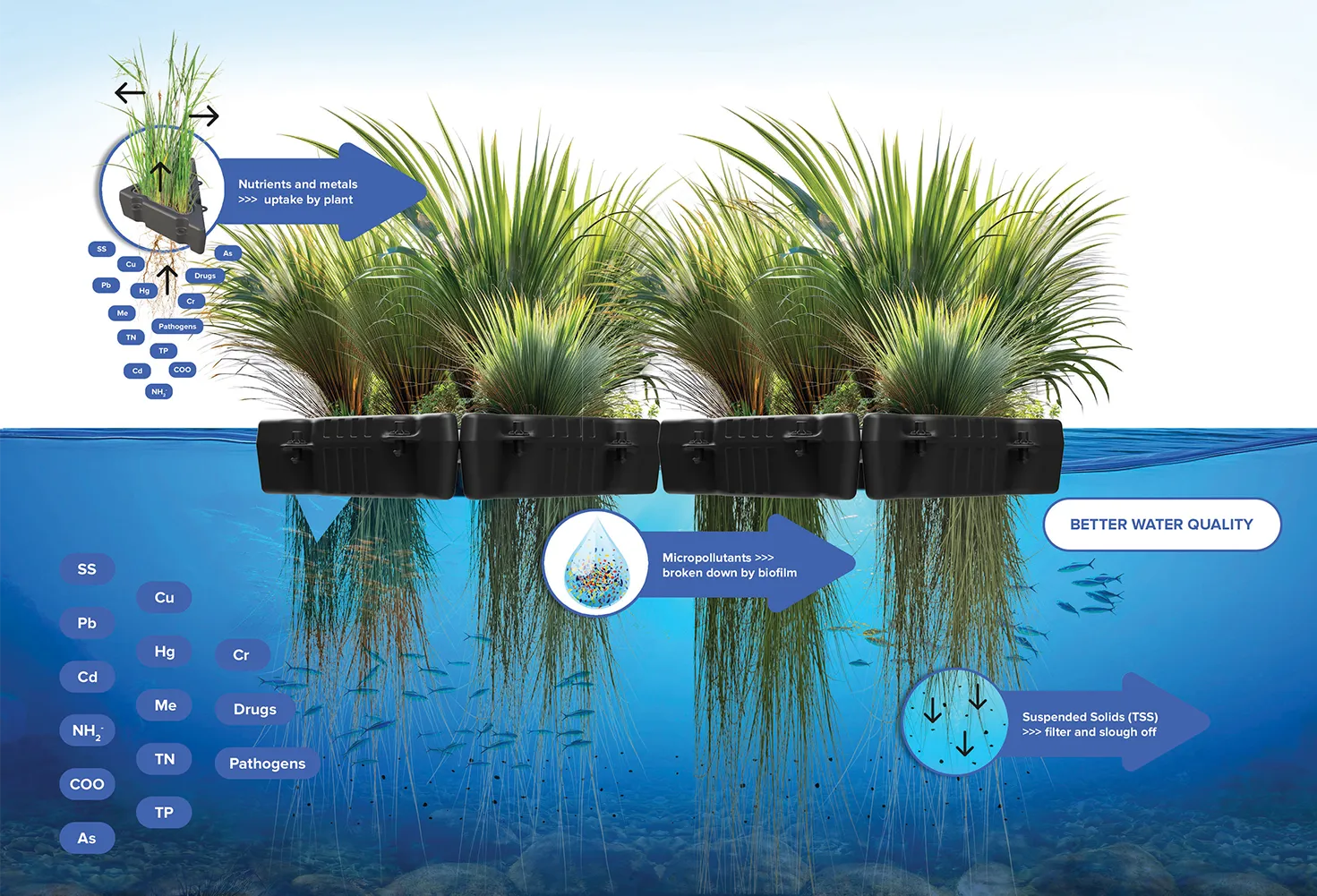
As plants establish, their roots grow into the water column, forming a dense, fibrous network. This dramatically increases the surface area available for treatment compared to open water alone.
What this does:
- Slows water movement around the roots
- Encourages particles to settle
- Creates conditions for biological activity
The root zone becomes the engine of the system.
Step 2: Microbial activity takes over
Microorganisms naturally attach to the roots, forming a biofilm layer.
Within this biofilm:
- Bacteria break down organic pollutants
- Nutrients are transformed into less harmful forms
- Contaminants are captured and stabilised
This microbial process is one of the most effective mechanisms for improving water quality.
Step 3: Nutrient uptake by plants
Plants play a direct role by absorbing nutrients such as nitrogen and phosphorus from the water.
Why this matters:
- Reduces the nutrients that fuel algal blooms
- Helps rebalance the aquatic ecosystem
- Supports long-term water quality improvement
As plants grow, they actively remove these pollutants from the system.
Step 4: Capturing suspended solids
The root network slows water movement, allowing suspended particles to settle out.
- Fine sediments become trapped within the root structure
- Heavier particles settle to the bottom
- Water clarity improves over time
This process helps reduce turbidity and prevents pollutants from travelling downstream.
Step 5: Supporting a healthier water system
s water quality improves, broader environmental benefits follow:
- Reduced algal growth
- More stable oxygen levels
- Improved habitat for aquatic life
- Healthier, more balanced ecosystems
FTWs don’t just treat water, they help restore it.
See it in action
To understand how these processes translate into real-world outcomes, explore project applications or speak with Atlan Stormwater about how Floating Treatment Wetlands can be applied to your site.