
A plain-English guide to the terms that come up in stormwater, water quality, and WSUD projects
If you’re planning, specifying, or evaluating Floating Treatment Wetlands (FTWs), you’ll run into a mix of scientific and industry language. This glossary breaks it down so councils, consultants, and developers can move faster with confidence.
Biofilm
A thin layer of microorganisms (bacteria, fungi, algae) that forms on plant roots and submerged surfaces.
Why it matters: Biofilm is a major driver of pollutant removal in FTWs, breaking down nutrients and trapping contaminants.
Bioremediation
The use of natural biological processes to clean polluted water.
Why it matters: FTWs rely on bioremediation through plants and microbes rather than chemicals or energy-intensive systems.
Constructed Wetland
A land-based, engineered system that treats water using soil, plants, and microbes.
Difference to FTWs: Constructed wetlands are fixed and require land area; FTWs float on existing water bodies.
Dissolved Oxygen (DO)
The amount of oxygen present in water.
Why it matters: Healthy DO levels support aquatic life and improve treatment performance. FTWs can help stabilise oxygen levels.
Eutrophication
Excess nutrients (mainly nitrogen and phosphorus) causing rapid algae growth.
Why it matters: Leads to poor water quality, odour, and fish kills. FTWs help reduce nutrient loads that drive eutrophication.
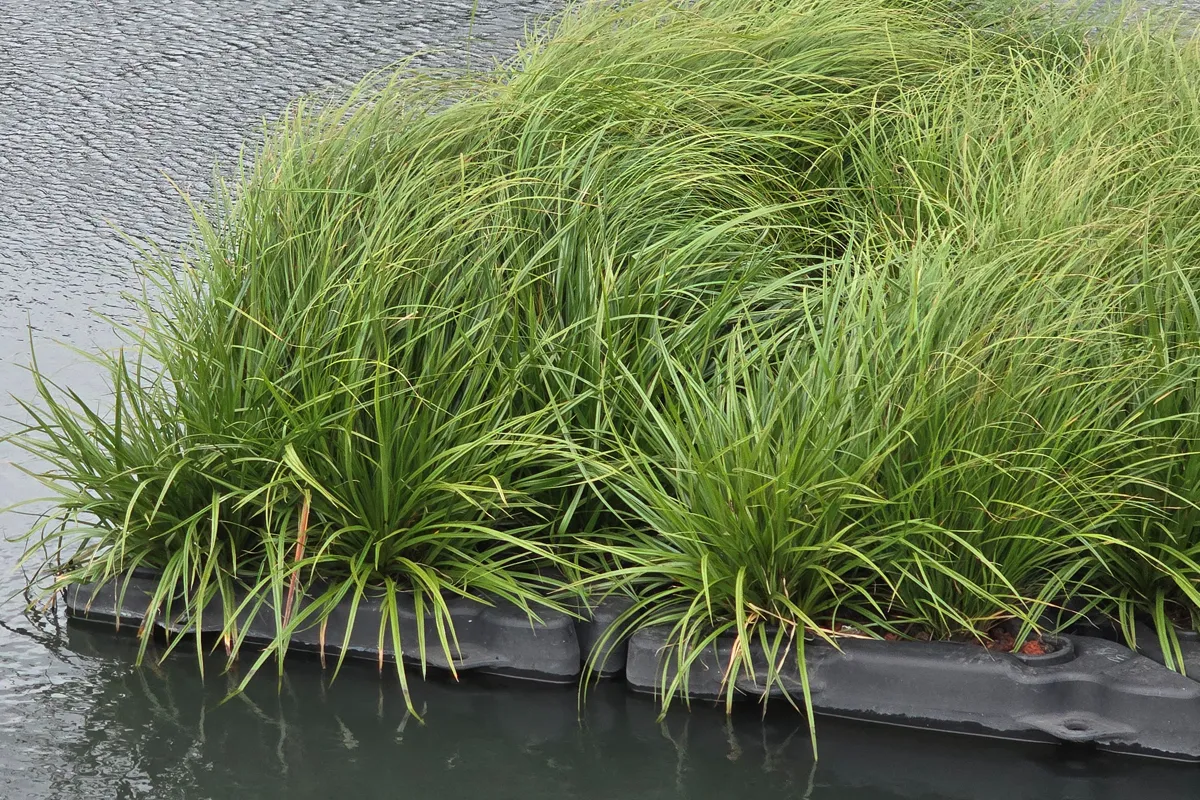
Floating Treatment Wetland (FTW)
A buoyant system planted with vegetation that floats on water, allowing roots to extend into the water column.
Why it matters: Provides water treatment, habitat, and visual uplift without needing additional land.
Gross Pollutant Trap (GPT)
A device that captures large debris like litter, leaves, and sediment before water enters treatment systems.
Why it matters: Often used upstream of FTWs as part of a treatment train.
Hydraulic Retention Time (HRT)
The amount of time water stays within a treatment system.
Why it matters: Longer retention generally improves pollutant removal. FTWs enhance treatment within existing water bodies.
Nutrients (Nitrogen & Phosphorus)
Key elements that support plant growth but become pollutants in excess.
Why it matters: Primary drivers of algal blooms; FTWs help absorb and reduce these nutrients.
Stormwater
Rainwater runoff from urban surfaces like roads, roofs, and car parks.
Why it matters: Carries pollutants into waterways; FTWs are designed to treat this runoff.
Total Suspended Solids (TSS)
Particles suspended in water such as sediment, organic matter, and debris.
Why it matters: High TSS reduces water clarity and carries attached pollutants. FTWs help trap and settle these particles.
Treatment Train
A combination of systems used together to treat stormwater (e.g. GPT → sediment basin → FTW).
Why it matters: FTWs are often one stage within a broader, more effective treatment approach.
Urban Heat Island Effect
Urban areas becoming hotter due to hard surfaces and lack of vegetation.
Why it matters: Water bodies with FTWs can help moderate local temperatures and improve amenity.
Water Sensitive Urban Design (WSUD)
An approach to urban planning that integrates water cycle management into design.
Why it matters: FTWs align with WSUD principles by improving water quality, supporting ecosystems, and enhancing public spaces.
Water Quality
A measure of the physical, chemical, and biological condition of water.
Why it matters: FTWs are implemented to improve overall water quality in urban and natural systems.